I
Montgomery Bus Boycott and the Birmingham Children’s Crusade
The Montgomery Bus Boycott (1955–56) and the Children’s Crusade in Birmingham (1963) were landmark civil rights campaigns that used coordinated, nonviolent action to confront segregation and exert sustained economic pressure to compel change. In Montgomery, Rosa Parks, a Black woman, refused to give up her seat on a public bus to a white rider and was arrested. On the day of Parks’ trial, Black residents—who made up 75–85% of bus riders—began a bus boycott which ultimately lasted 381 days, costing the system tens of thousands of dollars and crippling city transit until officials agreed to desegregate.
In Birmingham, where adults who protested against legalized segregation risked losing their jobs, it was the children who took to the streets. On May 2-10, 1963, thousands of Birmingham youths marched to City Hall and were met with police violence and arrests. The images of youngsters being assaulted with fire hoses and vicious dogs created some of the most searing images of the Civil Rights era, bringing national attention to the injustices faced by Black people in the South and exerting intense pressure on business owners, city leaders, and President Kennedy to support civil rights legislation. Black men, women, and children fought with their bodies and their economic power to force action toward desegregation and expanded job opportunities for Black citizens.

Photographs of brutal police dogs and high-pressure fire hoses aimed at the student protestors shocked the nation and helped turn public opinion into civil rights action. Unadorned posters and ephemera urged grassroots participation at the Bus Boycott.

Contemporary artworks inspired by these historic events. Lorna Simpson’s Three Figures (2014) reimagines a 1963 photograph of Birmingham children blasted by fire hoses, while Lava Thomas’s Mugshot Portraits: Women of the Montgomery Bus Boycott (2018) honors the women who, knowing they would be arrested, chose to turn themselves in—reclaiming their mug shots with dignity and resolve.
The Delano Grape Strike
The Delano Grape Strike and nationwide grape boycott of the late 1960s and early 1970s was a groundbreaking union-led protest in which Filipino and Mexican farmworkers joined forces to demand fair wages and humane working conditions. Led by the United Farm Workers (UFW) under César Chávez and Dolores Huerta, the campaign used strikes, marches, and a nationwide consumer boycott to pressure growers into signing contracts that improved pay and conditions for over 10,000 farmworkers and sparked broader labor reforms.
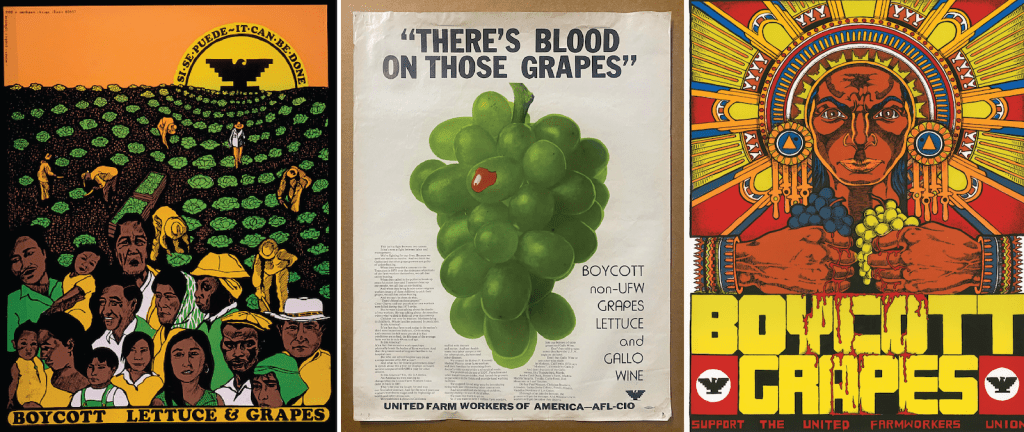
Pictured here are graphic posters used to support the Grape Boycott. Si Se Puede: Boycott Lettuce and Grapes (left) highlights cultural pride, solidarity, and support for the UFW boycott through the presence of farmworkers and the union’s black eagle. The other two posters incorporate blood imagery referencing the Teamsters, employed by the growers, who used violence in an attempt to sideline the UFW’s protests.
Anti-Apartheid
In 1985, a group of pop and rock artists created the song “Sun City,” making a vow to refuse lucrative work in the “Las Vegas of South Africa” until political changes were made.
In the 1980s, a global boycott movement helped pressure South Africa to dismantle apartheid, a system the U.N. had declared a crime against humanity. U.S. labor unions led divestment campaigns, student activists pushed universities to withdraw investments, and major artists and athletes refused to perform or compete in South Africa. Consumer boycotts targeted South African produce, diamonds, and companies doing business with the regime, isolating the government culturally and economically. These actions helped build the global pressure that contributed to Nelson Mandela’s release from prison and the start of negotiations that dismantled the white supremacist regime.
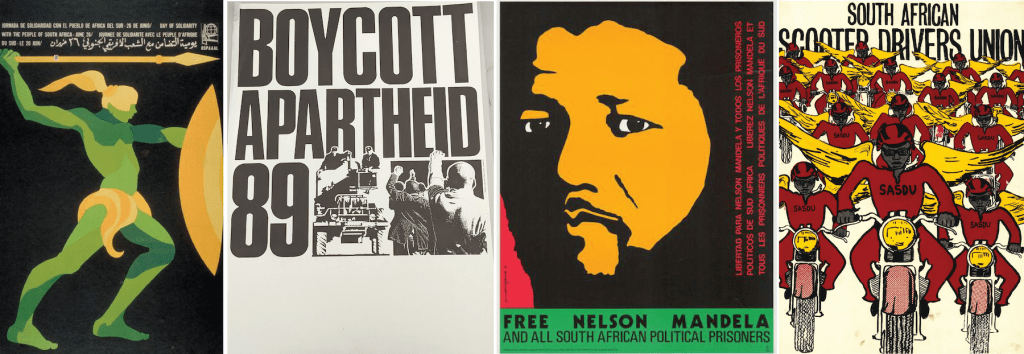
During the 1970s and ’80s, international activist groups created striking boycott posters that exposed the brutality of the apartheid regime and urged consumers to boycott South African products.
Diversity, Equity, and Inclusion (DEI)
During the 1930s, Black activists launched “Don’t Buy Where You Can’t Work” campaigns across several cities, targeting white-owned businesses in Black neighborhoods that refused to hire Black workers. These boycotts helped open up thousands of jobs to Black workers during the Depression and became a model for the picketing and consumer-pressure tactics of the Civil Rights era.
More recent campaigns have focused on holding major corporations like Target, Amazon, and Home Depot accountable for rolling back diversity and inclusion initiatives. In early 2025, Target announced an end to its DEI policy. The “We Ain’t Buying It” and #BoycottTarget actions, launched in response to Target’s policy change, caused a notable decline in Target’s performance. The company’s stock price and profits plunged, leading to the resignation of its CEO just one year after the company announced its DEI rollback. Market analysts and the Target company publicly acknowledged consumer boycotts as a significant contributing factor.